Omega-3 fatty acids get a lot of attention, and most of the headlines are about fish. So if you do not eat fish, you might wonder whether you are missing out. You do not need fish to get omega-3s, but it helps to understand the different types and where vegetarians can find each one. Here is a clear, no-panic guide.
What are omega-3s, and why do they matter?
Omega-3s are a family of polyunsaturated fats. Your body cannot make some of them from scratch, so they have to come from food. They are part of the membranes around every cell in your body, and they play roles in your heart, blood vessels, lungs, immune system and especially your brain and eyes.
There are three main omega-3s you will hear about:
- ALA (alpha-linolenic acid) is found in plant foods like flaxseed, chia seeds, walnuts, hemp seeds, canola oil and soy. It is the only omega-3 that is officially “essential,” meaning you must get it from your diet.
- EPA (eicosapentaenoic acid) and DHA (docosahexaenoic acid) are found mainly in fish and seafood. Your body can convert some ALA into EPA and DHA, but only a small amount.
Here is a fun fact: fish do not actually make EPA and DHA themselves. They get them by eating algae, or by eating smaller fish that ate algae. That matters for vegetarians, as you will see below.
How much ALA do teens need?
Experts have only set recommended amounts for ALA. For teens ages 14 to 18, the Adequate Intake is:
- Girls: 1.1 grams of ALA per day
- Boys: 1.6 grams of ALA per day
That is very doable. A single tablespoon of ground flaxseed has about 1.6 grams of ALA, and a small handful of walnuts has around 2.5 grams.
The best vegetarian sources of ALA
Approximate amounts:
- Chia seeds, 1 ounce (about 2 tablespoons): about 5 grams
- Walnuts, 1 ounce (about 14 halves): about 2.5 grams
- Hemp seeds, 3 tablespoons: about 2.5 grams
- Ground flaxseed, 1 tablespoon: about 1.6 grams
- Canola oil, 1 tablespoon: about 1.3 grams
- Edamame and other soy foods: smaller amounts that add up
A tip about flax: whole flaxseeds can pass through your body undigested, so buy them ground (sometimes sold as “flax meal”) or grind them yourself. Store ground flax in the fridge or freezer so it stays fresh.
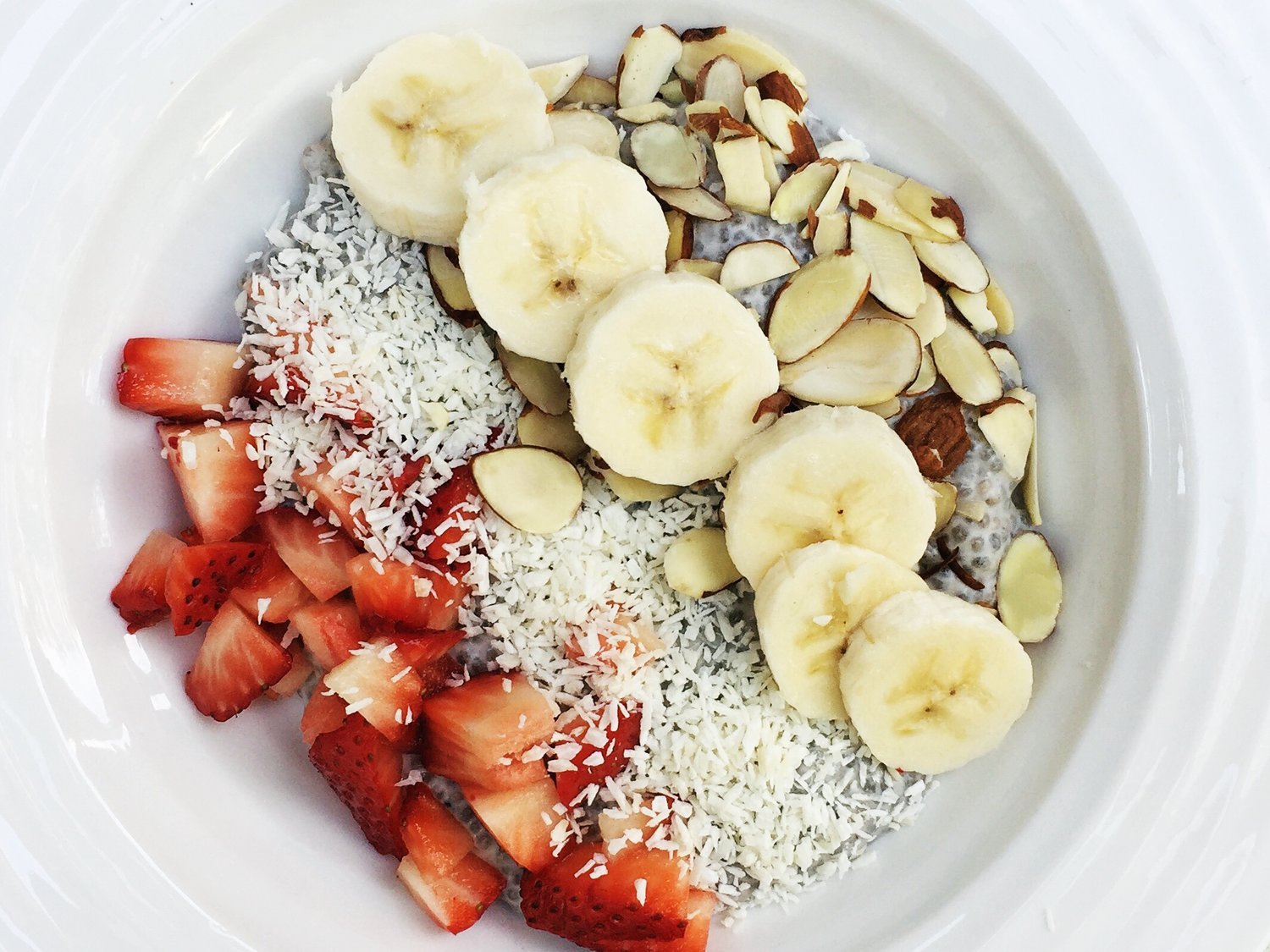
Chia is even easier, since you do not need to grind it. Our chia power pudding and coconut chia breakfast bowls are delicious ways to get a full day's worth of ALA before school.
What about EPA and DHA?
This is where things get a little more nuanced. Because your body converts only a small share of ALA into EPA and even less into DHA, vegetarians and vegans tend to have lower levels of EPA and DHA in their blood than people who eat fish. Researchers are still studying what that means for long-term health, and there is no official recommended amount of EPA or DHA in the United States.
You have a few options:
- Get plenty of ALA. Hitting your ALA target every day gives your body the raw material to make some EPA and DHA.
- Choose omega-3-enriched eggs if you eat eggs. Hens fed flax or algae lay eggs with more omega-3s, including some DHA. Check the carton.
- Look for DHA-fortified foods. Some plant milks, yogurts and other foods are fortified with algae-based DHA.
- Consider an algae oil supplement. Algal oil provides EPA and DHA straight from the original source, with no fish involved. It is a common choice for vegans and for people who simply do not eat fish.
Before you start any supplement, talk with your doctor or a registered dietitian, especially if you take medication or have a health condition. They can help you decide whether you need one and how much makes sense.
Balancing omega-3s and omega-6s
Omega-6 fats, found in many vegetable oils (like corn, sunflower and soybean oil), are also essential and are part of a healthy diet. Some experts think that eating a lot of omega-6 can make it slightly harder for your body to convert ALA to EPA and DHA. You do not need to avoid omega-6s. Just make sure omega-3 foods show up too, and use canola or olive oil as your go-to cooking oils some of the time.
Easy ways to work omega-3s into your day
- Sprinkle it. Stir a tablespoon of ground flax or hemp seeds into oatmeal, yogurt or a smoothie.
- Snack on it. Toss walnuts into trail mix, or eat them with an apple.
- Bake with it. Swap some flour for ground flax in muffins and pancakes. A “flax egg” (1 tablespoon ground flax plus 3 tablespoons water, left to thicken) can replace an egg in many vegan baking recipes.
- Dress it. Make salad dressing with canola or walnut oil.
- Pudding it. Chia pudding is basically an omega-3 dessert. Try our silky chocolate chia pudding.
A sample omega-3-smart day
- Breakfast: smoothie with banana, berries, soy milk and 1 tablespoon ground flax (about 1.6 g ALA)
- Snack: a small handful of walnuts (about 2.5 g ALA)
- Lunch: edamame and veggie grain bowl with a canola-based dressing
- Dinner: tofu stir-fry, plus an omega-3-enriched egg if you eat eggs
That easily covers the ALA target for both girls and boys, with room to spare.
Keep the big picture in mind
Omega-3s are just one piece of a healthy vegetarian diet. Make sure you are also covering vitamin B12, iron, calcium and vitamin D and protein. A variety of whole foods, including beans, whole grains, nuts, seeds, fruits and vegetables, takes care of most of it.
The bottom line
You do not need fish to get omega-3s. Aim for 1.1 grams (girls) or 1.6 grams (boys) of ALA a day from chia, flax, walnuts, hemp and canola oil, which is easy with a spoonful here and a handful there. If you want EPA and DHA too, look at omega-3-enriched eggs, DHA-fortified foods or an algae oil supplement, and check with your doctor first. For more help planning a balanced vegetarian diet, explore The Smart Girl's Guide to Going Vegetarian.
This article is for general information and is not a substitute for advice from your own doctor or registered dietitian.